
This is one of the oldest stationery in Quebec. Founded in 1851 by a american businessman, the company is composed of a half-dozen buildings on a fifteen hectares site. Saying that the site is large is an understatement, not only because it has a...

Urban and rural photographic exploration
The abandoned chemical plant
Witness of a bygone era
Eastern Townships (Quebec), Canada
For several times I passed by this little factory located in an old industrial area in the Eastern Townships, but I never been inside. Each time, I wondered if it was still active or abandoned. I must say that several tiles were broken, but I was confused with the whiteness of its garage door. A door without any dirt could only mean one thing: it had recently been installed. Moreover, the lawn was well maintained like the one owned by a retiree who cut its lawn every day.
So, it was a Saturday morning and I was walking around. I thought to myself that I had nothing to lose to take a look closer. First observation: the white door was locked and there was no key under the doormat...and no Doormat in fact.
I took a look around and found another door. An old wood door with a handle that you typically found at your grandmother's house.These was a lock just above. I take a chance to turn the handle without much hope.
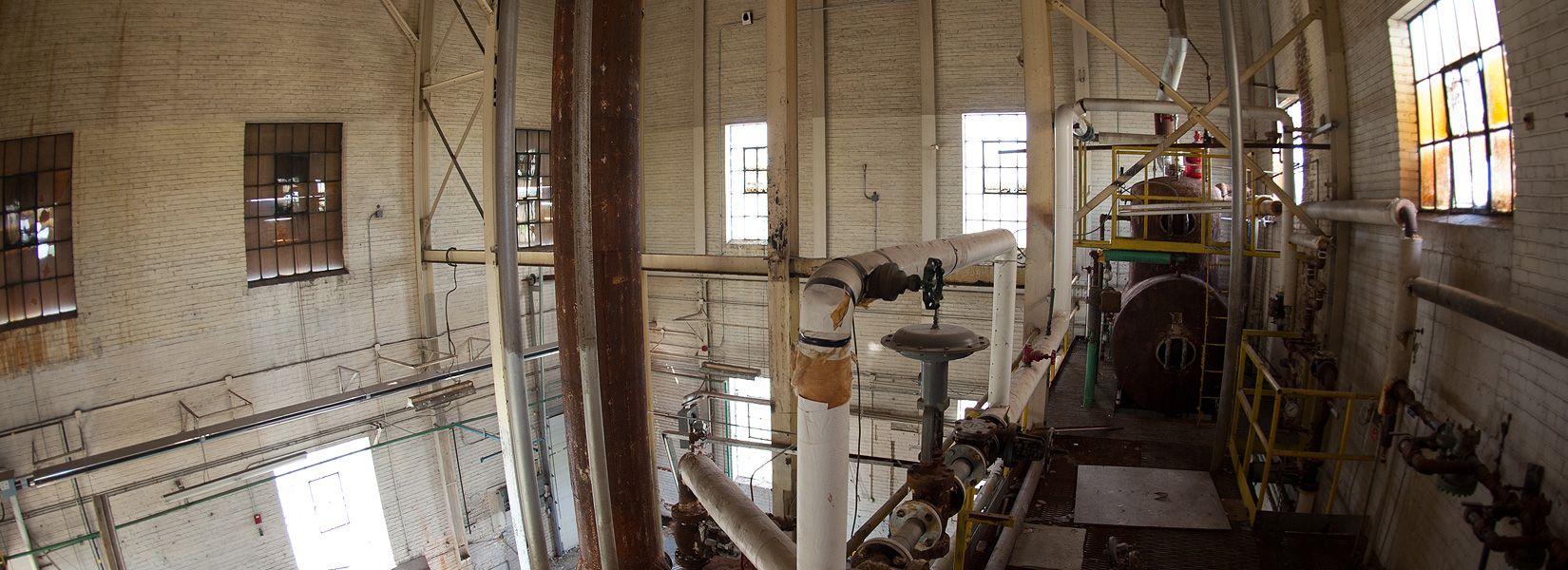
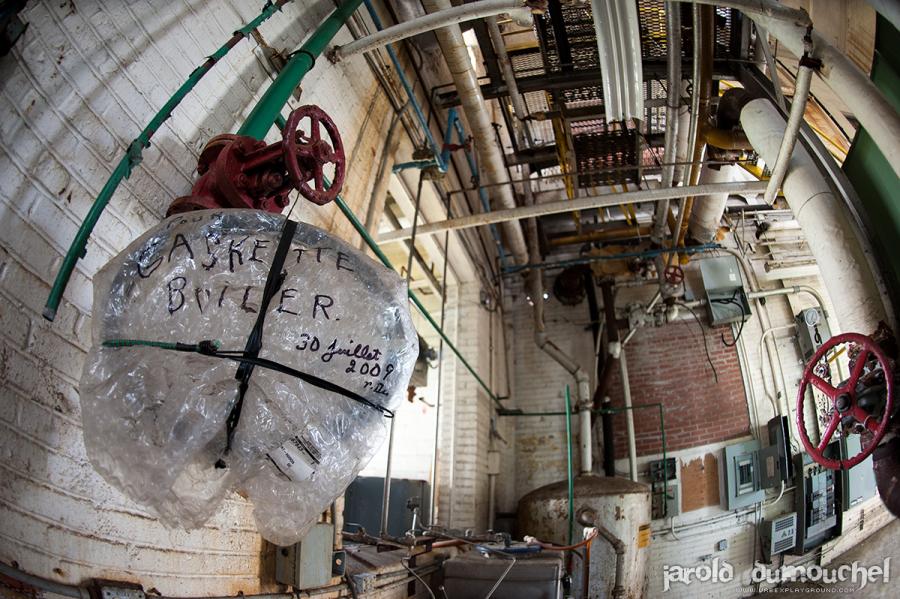
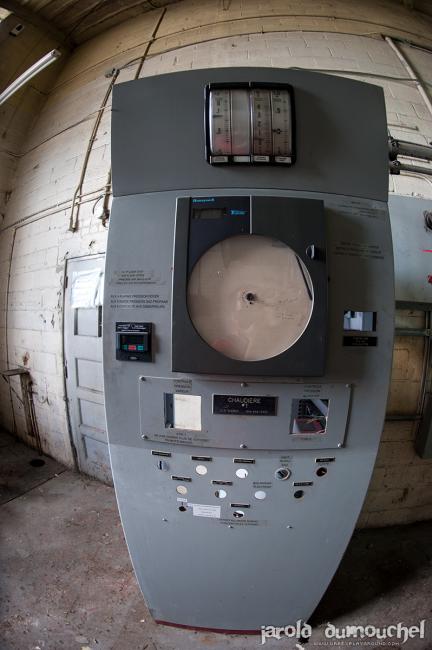
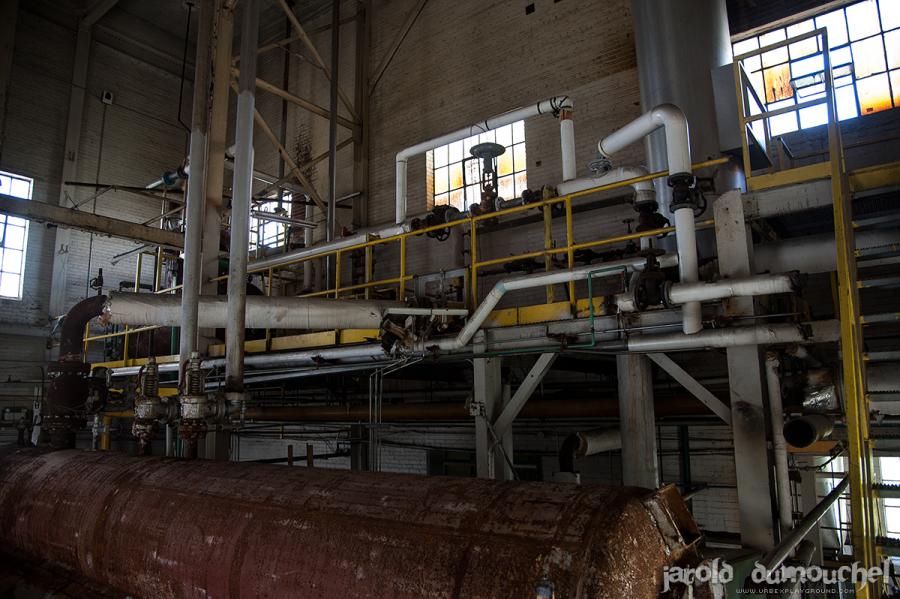
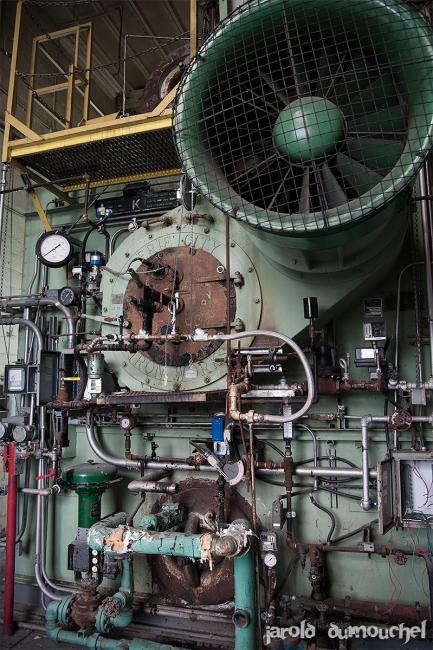
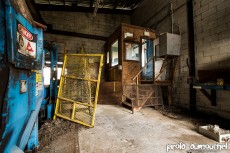
Big surprise for me, it wasn't locked! Well, as you may know, a unlocked door is for an urbexer a invitation to get in. Good news, the place was not only abandoned, but it was also in very good shape. Only one graffiti on the mirror but many signs of chemicals activities. On the concrete floor, a kind of white powder who looks like chlorine and also open traps from where you can see stagnant water and its black and thick color. Surely residues from the big boiler that occupies almost the entire space of the factory.
Quick visit, because after all, apart from the boiler and the surrounding structure, there is nothing else. In fact, thirty minutes later, I'm was already outside, happy to having the curiosity to see beyond that white door.

Photo gallery
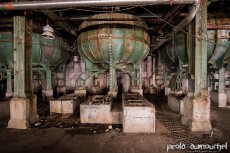
Interested by this place? Here are more pictures of the abandoned chemical plant.

Urbex Playground
needs you !
You have information about this place? Better still, you have pictures of this place that you are willing to share? Well, hurry to click this button before I came to kick your ass!
Related content
Saint-Jean-sur-Richelieu, Quebec (Canada)
Destroyed by mechanical shovels in 2011, it is a true slice of history of the city of Saint-Jean-sur-Richelieu who was destroyed that day in February. The adventure of the Singer factory has lasted over 100 years and has gave work to thousand of...
Montréal, Quebec (Canada)
Located in the Hochelaga-Maisonneuve neighborhood, the silo # 3 was built in 1923. The architect was John S. Metcalfe who were responsible for the construction of most silos in the Port of Montreal (1, 2, 3, 5). It is thanks to its innovations...
The advantage of a 4 hours ride to visit an abandoned sawmill is that we increase our chances of finding an intact place without the slightest trace of vandalism. Or at least, very little.
All along the road, the fear of finding a...


About Urbex playground
First of all, Urbex Playground is about urban and rural photography lovers. It is the respect of the places we have visited and to whom we have a great admiration. Of its contents, Urbex Playground wishes to preserve the memory of these abandoned, destroyed or dilapidated places who have made the glory of our fathers and which today we have, alas, not enough compassion.
We are not vandals or people necessarily involved in the preservation of these places. We do not pretend to believe that our pictures will change anything in the future of these churches, factories, homes and other abandoned buildings. We're just passionate about the image in the perpetual quest for new photographic challenges.
Urbex Playground is not a photo club, any more than we are touristic guides for these forbidden places. Moreover, in any case, Urbex Playground do not invites you to visit these places without the consent of its owners. These places are dangerous and by entering into these places, legal actions can be taken against you.
However, if you have pictures or information about any abandoned places, do not hesitate to contact us. We will be glad to publish them on the site, including your credit with your name and your website. Like this, our visitors will be able to visite your own website. Do not hesitate to contact us if you have any questions.
Urbex playground is social
Follow us on the following social network. Make sure also to visit these amazing websites by some of our members.
© 2018 Urbex Playground is a creation of Jarold & go. All rights reserved.